
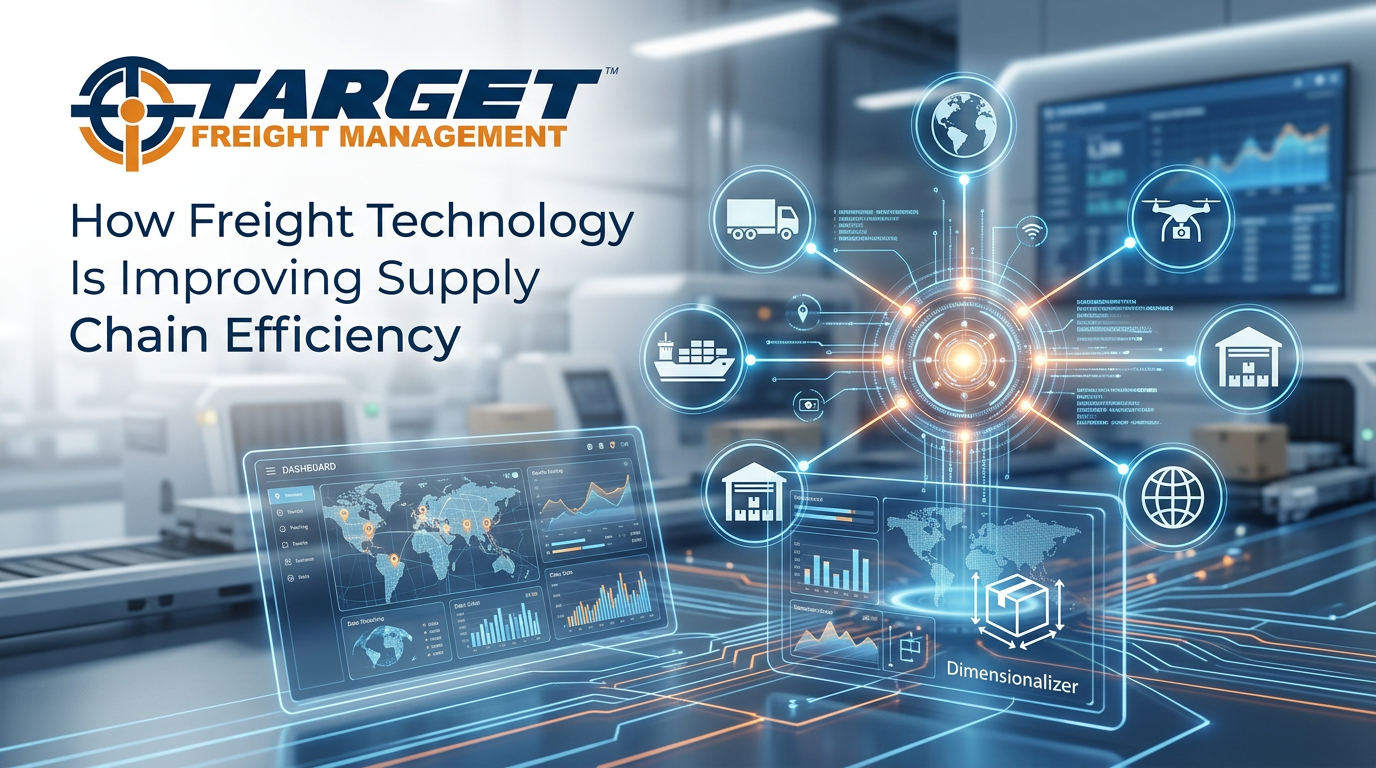
The Growing Role of Technology in Modern Logistics
Technology is no longer a support function in logistics—it is the foundation of modern supply chain efficiency. As shipping volumes increase and customer expectations continue to rise, businesses face growing pressure to move freight faster, more accurately, and with greater visibility than ever before.
What was once considered an advantage has become a necessity. Customers expect real-time updates, accurate delivery timelines, and consistent service. Internal teams need immediate access to shipment information, transportation costs, and carrier performance metrics to make informed decisions. Meanwhile, logistics managers are being asked to improve efficiency while controlling costs and maintaining service levels.
Meeting these demands through manual processes alone is no longer realistic.
The logistics industry has experienced significant technological advancement over the past decade. Transportation management systems, automation tools, shipment visibility platforms, dimensional scanning equipment, and freight analytics solutions have transformed how freight moves through the supply chain.
These technologies allow businesses to operate with greater speed, accuracy, and control while reducing many of the inefficiencies traditionally associated with freight management.
At Target Freight Management, we invest heavily in technology because we understand the role it plays in improving operational performance. Through tools like Empire TMS, our Dimensionalizer, Freight Audit and Pay services, and automated workflows, we help customers simplify complex logistics operations and create more efficient supply chains.
Technology is not replacing logistics expertise. Instead, it is enhancing decision-making, reducing manual workload, and providing businesses with the visibility they need to operate more effectively.
The result is a more connected and efficient transportation process that supports both short-term operational goals and long-term business growth.
Why Traditional Freight Management Creates Inefficiencies
Before examining how technology improves logistics performance, it is important to understand where many traditional freight processes create inefficiencies.
Historically, freight management involved a significant amount of manual work. Employees spent time requesting quotes, comparing carrier options, tracking shipments through phone calls, processing paperwork, reviewing invoices, and updating stakeholders throughout the shipping process.
While these methods can still move freight successfully, they often create challenges as shipment volume increases.
Manual processes are inherently slower. They require more labor, introduce more opportunities for error, and make it more difficult to maintain visibility across a growing transportation network.
For example, obtaining freight quotes manually often requires contacting multiple carriers individually, waiting for responses, and comparing pricing across separate systems. Tracking shipments may involve repeated calls or emails to carriers to obtain status updates.
Documentation management can become equally complex. Bills of lading, proof of delivery documents, invoices, and shipment records often exist across multiple platforms or communication channels, making information harder to access when needed.
These inefficiencies become increasingly difficult to manage as businesses grow.
The larger the transportation operation becomes, the more valuable automation, centralized visibility, and integrated technology solutions become.
Technology addresses many of these challenges by creating a more streamlined freight management process where information is accessible, workflows are automated, and operational decisions can be made more quickly.
Eliminating Manual Processes Through Automation
One of the most significant ways freight technology improves supply chain efficiency is through automation.
Traditional freight management often involves repetitive administrative tasks that consume valuable time and resources. Tasks such as requesting quotes, booking shipments, generating documents, updating shipment records, and communicating status updates may seem small individually, but collectively they require substantial effort.
Automation reduces the need for manual intervention by handling many of these tasks electronically.
Instead of relying on emails, spreadsheets, and phone calls, businesses can use integrated systems that automatically process information and execute routine workflows.
Reducing Administrative Workload
Administrative work is necessary, but it does not directly move freight. Every hour spent manually entering data or tracking down shipment information is time that could be used for higher-value operational planning and customer support.
Automation helps reduce this workload by streamlining repetitive activities.
Examples include:
- Automated carrier rate retrieval
- Electronic shipment booking
- Automatic document generation
- Shipment status notifications
- Exception alerts
- Invoice matching processes
- Reporting and analytics generation
By automating these activities, businesses improve efficiency while reducing the likelihood of human error.
Faster Freight Decisions
Automation also accelerates decision-making.
For example, instead of manually requesting LTL quotes from multiple carriers and waiting for responses, users can compare rates and transit times instantly through a centralized platform.
This allows logistics teams to evaluate options more quickly and make decisions based on current market information rather than delayed responses.
Faster decision-making improves responsiveness throughout the supply chain and helps businesses adapt more effectively to changing transportation conditions.
At Target Freight Management, automation plays an important role in helping customers simplify logistics operations and improve overall efficiency.
Improving Accuracy With the Dimensionalizer
One of the most common sources of unexpected freight costs is inaccurate shipment information.
Weight discrepancies, incorrect dimensions, and inaccurate freight classifications frequently result in reweigh charges, reclassification fees, billing disputes, and shipment delays.
Even small inaccuracies can create significant cost increases over time, particularly for businesses moving a high volume of LTL freight.
Because LTL pricing is heavily influenced by shipment dimensions, accurate freight measurement is critical.
The Cost of Inaccurate Shipment Data
Many businesses still rely on manual measurements or estimated dimensions when preparing freight shipments.
While these estimates may appear close enough, small inaccuracies can trigger carrier audits once freight enters the transportation network.
When carriers determine that actual dimensions differ from submitted information, additional charges may be applied.
These charges can include:
- Reweigh fees
- Reclassification costs
- Billing adjustments
- Administrative review time
- Invoice disputes
Beyond the direct financial impact, inaccurate shipment data can also affect operational planning and shipment visibility.
How the Dimensionalizer Improves Accuracy
Target Freight Management addresses this challenge through the use of our Dimensionalizer.
The Dimensionalizer is designed to capture precise shipment dimensions automatically, helping eliminate the inconsistencies that often occur with manual measurement processes.
By capturing accurate data at the point of entry, businesses gain greater confidence in shipment information before freight enters transit.
This level of precision improves:
- Billing accuracy
- Carrier pricing consistency
- Shipment planning
- Freight classification accuracy
- Operational efficiency
More importantly, it reduces the likelihood of costly surprises later in the transportation process.
Accurate shipment data creates a stronger foundation for the entire freight management workflow, helping businesses improve both cost control and operational reliability.
The Connection Between Technology and Operational Consistency
Consistency is one of the most valuable outcomes technology can provide.
While many businesses initially invest in logistics technology to reduce costs or improve speed, one of the greatest long-term benefits is the ability to create repeatable, reliable processes.
Technology standardizes activities that might otherwise vary from shipment to shipment.
This includes shipment booking, tracking, documentation management, reporting, communication workflows, and carrier selection processes.
When operations become more standardized, businesses experience fewer disruptions, fewer errors, and stronger overall supply chain performance.
Consistency also supports scalability. As shipment volume grows, technology allows businesses to maintain operational control without increasing administrative workload at the same rate.
This creates a more sustainable logistics model that can support long-term growth while maintaining service quality.
At Target Freight Management, we view technology not simply as a collection of tools, but as a framework for creating more consistent and efficient transportation operations.
Real-Time Visibility Across All Shipments
Visibility is one of the most important components of supply chain efficiency. No matter how well a shipment is planned, businesses lose operational control when they cannot see where freight is located or how it is progressing through transit.
In the past, shipment tracking often relied on phone calls, emails, and manual status requests. While these methods provided information, they were often delayed and time-consuming. By the time an update was received, the situation may have already changed.
Modern freight technology has transformed shipment visibility by providing real-time access to transportation data throughout the shipping process.
Businesses can now monitor freight from pickup through final delivery, allowing operational teams to stay informed without relying on constant follow-up communication.
Why Visibility Improves Supply Chain Performance
Real-time visibility helps businesses respond more effectively to changing conditions. Instead of learning about delays after they impact customers or operations, logistics teams can identify issues earlier and take corrective action when appropriate.
For example, if a shipment encounters weather-related delays or traffic disruptions, visibility tools can help teams communicate updated delivery expectations and adjust operational plans accordingly.
This proactive approach reduces uncertainty and improves coordination across the supply chain.
Visibility also improves customer service. When shipment information is readily available, businesses can provide faster and more accurate updates without relying on manual carrier communication.
Customers increasingly expect transparency throughout the shipping process. Technology helps meet those expectations while reducing the administrative burden on logistics teams.
Centralized Shipment Management Through Empire TMS
Through Empire TMS, customers can monitor shipments from a single centralized platform rather than managing information across multiple systems.
This creates a more efficient workflow by providing access to:
- Shipment status updates
- Transit progress visibility
- Carrier information
- Delivery milestones
- Historical shipment records
- Operational reporting
Having all shipment information accessible in one location improves decision-making and reduces the need for repeated communication between stakeholders.
At Target Freight Management, visibility is a critical part of helping customers maintain stronger control over transportation operations while improving responsiveness throughout the supply chain.
Data-Driven Decision Making
Technology not only improves visibility—it generates valuable operational data that can be used to strengthen logistics strategy.
Every shipment produces information that helps businesses understand how their transportation network is performing. Over time, this information becomes one of the most valuable resources available for improving efficiency and controlling costs.
Without data, many freight decisions are based on assumptions. Businesses may continue using the same carriers, shipping methods, or routing strategies simply because they are familiar.
Data provides the insight needed to evaluate whether those decisions are producing the best possible outcomes.
Turning Shipment Information Into Actionable Insight
Shipment history contains valuable information about transportation costs, carrier performance, transit consistency, accessorial charges, and operational efficiency.
When this information is organized and analyzed properly, businesses gain a clearer understanding of where improvements can be made.
For example, data may reveal:
- Recurring delays on specific shipping lanes
- Carriers that consistently outperform others
- Frequent accessorial charges tied to operational issues
- Opportunities to consolidate freight
- Regions experiencing higher transportation costs
- Patterns affecting customer service performance
These insights allow logistics teams to make decisions based on measurable results rather than assumptions alone.
Supporting Long-Term Operational Improvement
One of the greatest benefits of data-driven logistics is the ability to improve continuously over time.
Instead of evaluating shipments individually, businesses can identify broader trends that affect performance across the transportation network.
This larger perspective helps organizations focus on long-term operational improvement rather than simply responding to isolated shipment issues.
At Target Freight Management, data analysis plays a central role in helping customers strengthen transportation performance, reduce inefficiencies, and create more scalable logistics operations.
Streamlining Freight Audit and Pay
Another area where technology significantly improves supply chain efficiency is freight billing.
Managing freight invoices manually can be a time-consuming and error-prone process. As shipment volume increases, reviewing invoices individually becomes more difficult, creating opportunities for overpayments, billing discrepancies, and administrative inefficiencies.
Many organizations discover that invoice management consumes a significant amount of time despite adding little strategic value to the overall transportation process.
Technology helps solve this challenge by automating key portions of the freight audit and payment workflow.
The Challenges of Manual Invoice Review
Without automation, logistics teams often spend considerable time reviewing invoices against shipment records to verify accuracy.
This process may involve checking:
- Quoted rates
- Accessorial charges
- Freight classifications
- Shipment dimensions
- Fuel surcharge calculations
- Delivery confirmations
While these reviews are important, performing them manually can create delays and increase administrative workload.
Human error can also affect invoice accuracy, making it easier for discrepancies to go unnoticed.
How Freight Audit and Pay Improves Efficiency
Target Freight Management offers Freight Audit and Pay services designed to streamline this process through technology and automation.
Each invoice is matched against shipment data to verify accuracy before payment is approved.
This helps:
- Reduce overpayments
- Identify billing discrepancies
- Improve financial visibility
- Reduce administrative workload
- Strengthen cost control
The result is a more efficient billing process that provides greater confidence in transportation spending while reducing the time required to manage freight invoices.
Technology Supports Scalability and Growth
One of the most significant advantages of freight technology is its ability to support growth without requiring a proportional increase in administrative resources.
As businesses expand, transportation operations naturally become more complex. Shipment volume increases, carrier networks expand, and customer expectations continue to evolve.
Without technology, managing this complexity often requires additional personnel and manual processes.
Technology helps organizations scale more efficiently by creating standardized workflows and centralized visibility that support higher shipment volume without dramatically increasing operational workload.
Creating Repeatable Processes
Consistency becomes increasingly important as freight activity grows.
Technology allows businesses to standardize key logistics functions such as:
- Carrier selection
- Shipment booking
- Tracking processes
- Documentation management
- Invoice review
- Operational reporting
These repeatable processes improve efficiency while reducing the variability that often accompanies growth.
Supporting Long-Term Logistics Strategy
Scalability is not just about handling more shipments. It is about maintaining service quality, visibility, and operational control as transportation activity expands.
Technology provides the infrastructure needed to support this growth while helping businesses avoid many of the inefficiencies that can emerge during expansion.
At Target Freight Management, we view technology as an important component of building logistics operations that are both efficient today and prepared for future growth.
The TFM Advantage
By combining tools like Empire TMS, the Dimensionalizer, Freight Audit and Pay services, and automated workflows, Target Freight Management creates a fully integrated logistics experience designed to improve efficiency across every stage of the transportation process.
Rather than relying on disconnected systems and manual coordination, customers gain access to technology that supports greater visibility, stronger accuracy, and more informed decision-making.
This integrated approach helps reduce operational friction while creating a more consistent freight management experience.
Technology alone does not solve logistics challenges. However, when combined with industry expertise and proactive operational support, it becomes a powerful tool for improving supply chain performance.
At Target Freight Management, we focus on using technology strategically to help customers improve transportation outcomes while maintaining flexibility and control.
Building a More Efficient Supply Chain Through Technology
Freight technology is not simply improving efficiency—it is reshaping how modern supply chains operate.
Automation, visibility tools, dimensional scanning, transportation management systems, analytics platforms, and freight audit solutions all contribute to stronger operational performance and more informed decision-making.
Businesses that embrace these technologies are better positioned to reduce costs, improve service reliability, increase visibility, and support long-term growth.
As transportation networks become more complex and customer expectations continue to evolve, technology will remain one of the most important drivers of supply chain efficiency.
At Target Freight Management, we are committed to delivering technology solutions that help customers simplify logistics operations, improve performance, and gain greater control over every shipment.