
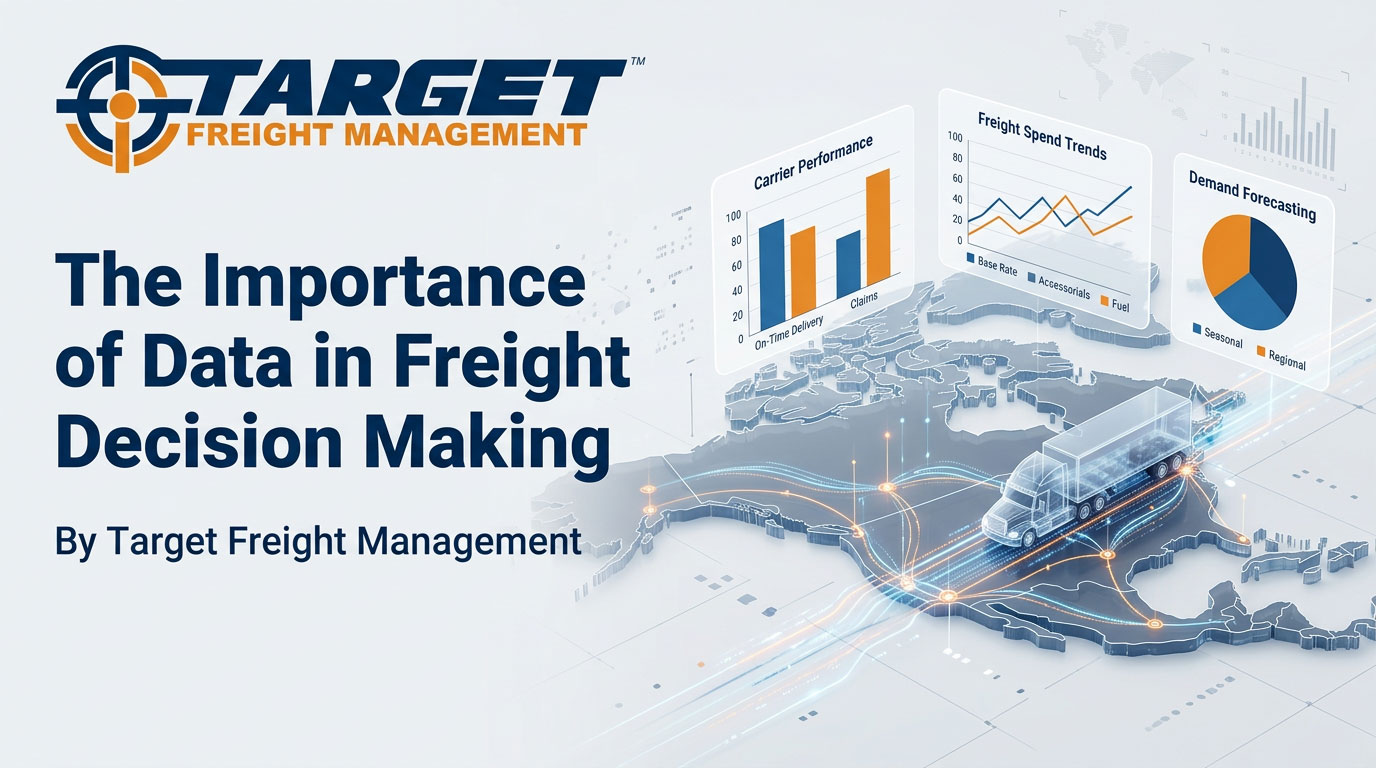
Why Data Has Become Essential in Freight Decision Making
In today’s logistics landscape, data is one of the most powerful tools available to businesses. Every shipment creates information that can help companies better understand how their freight operations are performing. Rates, transit times, accessorial charges, carrier performance, delivery consistency, claims activity, and shipment volume all tell a larger story about how efficiently freight is being managed.
Companies that leverage data effectively are able to reduce costs, improve performance, and make more informed strategic decisions. Instead of relying on assumptions or reacting to problems after they occur, businesses can use shipment data to identify patterns, uncover inefficiencies, and make adjustments that support stronger long-term results.
On the other hand, businesses that do not use data often rely on guesswork. They may continue using the same carriers, shipping methods, or internal processes simply because those choices are familiar. Over time, that can lead to higher costs, inconsistent performance, and missed opportunities to improve the overall freight strategy.
At Target Freight Management, we help our customers transform raw shipment data into actionable insights that drive measurable results. The goal is not just to collect information. The goal is to use that information to make freight operations more efficient, more transparent, and easier to manage as business needs evolve.
Moving From Guesswork to Clear Operational Insight
Many freight decisions are made quickly. A shipment needs to move, a carrier needs to be selected, a rate needs to be approved, and a delivery timeline needs to be confirmed. Without strong data, those decisions can become reactive. Teams may choose the lowest rate, use the most familiar carrier, or follow the same process they have always used without knowing whether it is still the best option.
That approach may work for a single shipment, but it becomes risky across a larger freight operation. As shipment volume grows, small inefficiencies begin to multiply. A few recurring accessorial charges, a handful of delayed lanes, or inconsistent carrier communication can quietly increase costs and create operational strain.
Data gives businesses a clearer view of what is actually happening. It helps answer important questions that cannot be answered through assumptions alone:
- Where is freight spend increasing?
- Which carriers are performing consistently?
- Which lanes are creating the most delays?
- Where are accessorial charges occurring most often?
- Which shipping modes are being used most efficiently?
- Where are there opportunities to reduce cost without sacrificing service?
When companies can answer these questions with accurate information, they are better prepared to make decisions that improve performance instead of simply reacting to problems.
Gaining Full Visibility Into Freight Spend
Freight costs are often more complex than they appear. Many businesses focus on base rates because those are the most visible costs upfront. However, the total cost of freight is rarely limited to the quoted rate.
Accessorial charges, fuel surcharges, detention fees, reclassification costs, appointment fees, residential delivery charges, liftgate fees, and other add-ons can significantly impact total spend. If those costs are not tracked carefully, they can become accepted as normal even when they point to preventable inefficiencies.
Without detailed data, it is difficult to understand where money is being spent or where savings opportunities exist. A business may know that freight spend is rising, but without a deeper look at shipment data, it may not know whether the increase is tied to carrier rates, accessorial charges, packaging issues, lane inefficiencies, or mode selection.
How Data Reveals Cost Patterns
By analyzing shipment data, businesses can identify patterns that would otherwise be easy to miss. For example, recurring detention charges at a specific location may indicate that freight is not ready when carriers arrive or that dock scheduling needs to be adjusted. Reclassification charges may point to inaccurate shipment dimensions, packaging issues, or incorrect freight class information.
Similarly, certain lanes may appear cost-effective at first glance but become more expensive over time due to delays, limited carrier availability, or frequent accessorial charges. Without freight data, these issues can remain hidden beneath the surface.
With the right reporting in place, businesses can move beyond general cost awareness and start identifying the exact areas where freight spend is being affected. That visibility allows for more targeted improvements instead of broad cost-cutting decisions that may not solve the root issue.
Why Visibility Supports Better Cost Control
Freight cost control is not just about finding lower rates. It is about understanding the full cost of moving freight and making decisions that improve efficiency over time. A lower rate may not create real savings if it results in more delays, more claims, or more administrative work.
Data helps businesses compare the true cost and performance of different shipping decisions. It can show whether consolidation opportunities exist, whether certain shipment types are being routed inefficiently, or whether specific carriers are generating more unexpected charges than others.
This level of visibility supports better budgeting, more accurate forecasting, and stronger long-term logistics planning. When companies understand what is driving their freight costs, they can make adjustments that are specific, measurable, and more likely to create meaningful results.
Identifying Inefficiencies That Are Easy to Overlook
Not every logistics inefficiency is obvious. Some issues create major disruptions, but others develop quietly over time. A shipment that arrives one day late, an accessorial charge that appears occasionally, or a carrier that communicates inconsistently may not seem significant when viewed individually.
The problem is that these small issues can become expensive when they happen repeatedly. A few extra charges each week can add up over the course of a year. A lane that regularly performs below expectations can affect customer satisfaction and internal planning. A carrier that frequently requires follow-up can increase the workload on internal teams.
Data helps businesses see these issues as patterns rather than isolated events. When shipment information is reviewed over time, recurring inefficiencies become easier to identify and address.
Examples of Hidden Freight Inefficiencies
Some of the most common inefficiencies that data can reveal include:
- Recurring accessorial charges: These may indicate problems with scheduling, packaging, delivery requirements, or shipment setup.
- Underperforming lanes: Certain routes may experience repeated delays, higher costs, or limited carrier availability.
- Inconsistent carrier performance: Some carriers may perform well overall but struggle in specific regions or shipment types.
- Mode selection issues: Shipments may be moving LTL when partial or truckload options would be more efficient.
- Claims trends: Repeated damage claims may point to packaging, handling, or carrier selection concerns.
These details matter because they help businesses focus their improvement efforts where they will have the greatest impact. Instead of guessing which part of the freight process needs attention, companies can use data to identify specific opportunities.
Measuring and Improving Carrier Performance
Carrier performance varies widely, and relying on assumptions can lead to poor decision-making. A carrier may appear reliable based on a few successful shipments, but broader data may tell a different story. Likewise, a carrier with a slightly higher rate may deliver stronger long-term value because of consistent performance, fewer claims, and better communication.
Data provides a clear, objective view of how carriers perform across key metrics. These metrics include on-time delivery rates, claims frequency, transit consistency, communication responsiveness, and issue resolution. By tracking this information, businesses can make more informed decisions about which carriers to use and when to make adjustments.
Why Carrier Data Matters
Carrier selection has a direct impact on freight performance. The lowest rate does not always produce the best outcome, especially if the carrier creates delays, communication gaps, or claims issues. When businesses evaluate carriers using data, they can better understand the relationship between cost and performance.
For example, one carrier may offer competitive pricing but consistently miss delivery appointments on a specific lane. Another carrier may cost slightly more but deliver stronger reliability and fewer disruptions. Without performance data, those differences may not be clear until issues begin affecting customers or internal operations.
By measuring carrier performance over time, businesses can build a stronger carrier strategy. They can identify which partners are best suited for certain lanes, which carriers may need to be replaced, and where service expectations are not being met.
How Data Supports Better Carrier Decisions
Carrier performance data helps businesses make decisions based on actual results instead of assumptions. This creates a more consistent and reliable freight operation. It also helps strengthen relationships with carriers that perform well, because those partnerships can be supported with clear expectations and measurable outcomes.
At Target Freight Management, we track carrier performance across key operational areas to help customers make informed decisions. This allows us to recommend carriers based on proven reliability, not just price.
When carrier decisions are guided by data, businesses gain better control over service quality and long-term freight performance.
Identifying Trends and Forecasting Demand
Historical data reveals trends that can help businesses plan more effectively. Freight operations rarely stay the same throughout the year. Shipment volume changes, regional demand shifts, capacity tightens, and seasonal delays affect how freight moves across the supply chain.
Without data, these changes often feel unpredictable. Businesses may find themselves reacting to disruptions instead of preparing for them ahead of time. This reactive approach can lead to rushed decisions, higher transportation costs, and reduced service consistency.
Data-driven forecasting creates a more proactive logistics strategy. By reviewing shipment history and operational trends, businesses can better understand how freight patterns change over time and make adjustments before disruptions occur.
Using Historical Data to Improve Planning
Historical shipment data helps businesses identify recurring trends tied to lanes, shipment volume, regional performance, and transportation costs. These patterns often reveal operational challenges that repeat throughout the year.
For example, certain shipping lanes may experience seasonal congestion during peak freight periods. Some regions may show higher transportation costs during specific months because of capacity shortages or increased demand. Weather patterns may also affect transit consistency within certain geographic areas.
When these trends are visible ahead of time, businesses can plan more effectively instead of reacting after delays begin affecting operations.
Historical data can also support stronger labor planning, inventory management, and customer communication. If shipment volume typically increases during a particular season, businesses can prepare warehouse operations, staffing, and transportation capacity in advance.
This level of preparation reduces operational strain while helping maintain more consistent service performance during periods of increased activity.
Forecasting Supports Better Decision Making
Forecasting is not just about predicting shipment volume. It is about using operational data to guide more informed logistics decisions.
For example, if data shows recurring delays on specific lanes during certain periods, businesses may choose to shift shipping schedules, adjust carrier allocation, or move freight earlier to avoid disruptions.
Likewise, if certain regions consistently experience higher transportation costs during capacity shortages, businesses can use forecasting to prepare budgets more accurately and secure transportation capacity earlier.
This proactive approach creates stronger operational control and helps businesses maintain more consistent freight performance even when market conditions change.
At Target Freight Management, we help customers use historical shipment trends and transportation analytics to improve planning and strengthen long-term logistics strategy.
Forecasting allows businesses to move beyond reactive transportation management and create a more stable, scalable freight operation supported by measurable operational insight.
Supporting Strategic Growth Through Data
As businesses grow, logistics operations naturally become more complex. New markets, expanded customer bases, increased shipment volume, and broader distribution networks all create additional transportation challenges that require stronger operational visibility.
Data becomes increasingly important during periods of growth because it helps businesses make decisions based on measurable performance rather than assumptions.
Without accurate transportation data, growth can introduce inefficiencies that become difficult to manage over time. Freight costs may increase unexpectedly, delivery consistency may decline, and operational coordination may become more difficult as shipment activity expands.
A data-driven logistics strategy helps businesses scale more effectively by creating visibility into how transportation operations are performing at every stage of growth.
Making Expansion Decisions with Better Visibility
As companies expand into new markets, transportation data can help guide important operational decisions related to distribution strategy, carrier selection, and service levels.
For example, shipment analytics may reveal that certain regions are more cost-effective to serve through specific carrier networks or shipping modes. Data may also show where transit times become inconsistent or where delivery costs increase due to limited carrier availability.
These insights allow businesses to evaluate expansion opportunities more strategically rather than relying on assumptions about transportation performance.
Data can also help businesses identify where operational infrastructure may need to evolve to support growth more effectively.
For example, shipment volume trends may indicate that freight consolidation opportunities exist within a growing region. Alternatively, transportation analytics may show that adding distribution support within a certain market could improve delivery consistency and reduce overall freight costs.
Without visibility into these operational patterns, businesses may continue scaling with inefficient transportation processes that become more difficult and expensive to correct later.
Scalable Logistics Requires Better Information
Growth creates more moving parts across the supply chain. More shipments, more customers, more carriers, and more delivery points all increase operational complexity.
Data helps businesses maintain control as this complexity grows. Instead of relying on fragmented reporting or disconnected systems, businesses can use centralized transportation data to monitor operational performance more consistently.
This visibility supports stronger scalability because decisions are based on measurable trends rather than reactive problem-solving.
At Target Freight Management, we help customers use logistics data to support smarter long-term growth strategies that balance cost control, operational consistency, and customer expectations.
The TFM Advantage
Technology and reporting play a major role in modern freight management. Businesses need more than shipment visibility alone. They need access to meaningful information that helps them understand how their transportation operation is performing over time.
Through Empire TMS, Target Freight Management provides customers with detailed reporting and analytics designed to support better freight decision-making at every level.
This includes shipment history, cost breakdowns, transit reporting, carrier performance metrics, and operational visibility that allows businesses to evaluate transportation activity more strategically.
Turning Shipment Data Into Actionable Insight
Collecting transportation data is only valuable if businesses can use that information to improve operations. Empire TMS helps organize shipment information into a more accessible and actionable format.
Instead of reviewing freight activity manually across disconnected systems or spreadsheets, businesses can evaluate transportation performance through centralized reporting tools that provide clearer operational visibility.
This allows customers to identify trends more quickly, monitor performance more accurately, and make transportation decisions with greater confidence.
For example, businesses can review lane performance, compare carrier consistency, monitor recurring charges, and evaluate historical shipment activity in ways that support stronger long-term planning.
The ability to access real-time information also improves responsiveness when operational issues arise. Instead of waiting until after disruptions affect customers or internal operations, businesses can identify concerns earlier and respond more proactively.
Supporting Better Decision Making Across the Supply Chain
Freight decisions affect multiple areas of the business, including operations, customer service, inventory management, production planning, and financial forecasting.
Access to stronger transportation data helps align these areas by creating a more consistent view of shipment performance and operational activity.
For example, customer service teams can provide more accurate updates when shipment visibility improves. Operations teams can plan more effectively when transportation timelines become more predictable. Financial teams can forecast freight spend more accurately when cost trends are easier to evaluate.
This level of visibility creates stronger coordination across the organization while helping reduce uncertainty throughout the supply chain.
At TFM, we view data as a critical part of building more efficient, scalable, and reliable freight operations for our customers.
Why Data Is the Foundation of Modern Logistics Strategy
Data is no longer optional in logistics. It has become one of the most important tools businesses can use to improve operational visibility, strengthen transportation performance, and support long-term growth.
Companies that rely on assumptions or reactive decision-making often struggle with rising freight costs, inconsistent carrier performance, and limited visibility into operational inefficiencies.
Businesses that embrace data-driven decision-making are better positioned to identify trends, improve planning, strengthen carrier strategy, and maintain stronger control over their freight operations.
This level of visibility becomes increasingly important as supply chains grow more complex and customer expectations continue to rise.
At Target Freight Management, we help customers use transportation data to make smarter operational decisions that improve consistency, reduce inefficiencies, and support scalable logistics performance.
The businesses that understand how to leverage freight data effectively will be better prepared to adapt, compete, and grow within an increasingly demanding logistics environment.