
Why Logistics Becomes More Complex as You Grow
As businesses grow, their logistics operations naturally become more complex. What once worked for a small or mid-sized company often begins to break down under increased volume, expanded shipping lanes, and higher customer expectations. Processes that were once manageable with a small team or basic tools start to require more coordination, more oversight, and more time.
This shift doesn’t always happen gradually. In many cases, growth exposes inefficiencies quickly. A business that adds new customers, expands into new regions, or increases order frequency may find that its existing logistics approach can no longer keep up. Shipments take longer to coordinate, communication becomes fragmented, and maintaining consistency across deliveries becomes more difficult.
At the same time, expectations are increasing. Customers expect faster delivery, more accurate tracking, and consistent service regardless of volume. Meeting those expectations while managing internal logistics can stretch teams thin and lead to operational strain.
This is where many businesses begin to experience friction. Logistics transitions from being a manageable function to a critical challenge that impacts cost, service, and overall performance.
Without the right infrastructure in place, growth can introduce inefficiencies instead of improvements. Costs increase, processes slow down, and internal teams spend more time reacting to issues rather than focusing on strategic priorities.
To scale effectively, businesses need a logistics strategy that can support increased demand without introducing unnecessary complexity. This is where a third-party logistics provider plays a key role.
Scaling Without Increasing Complexity
Growth should not come at the expense of operational efficiency. As order volumes increase, so do the challenges associated with coordinating shipments, managing carriers, and maintaining consistent service levels. Without a structured system in place, these challenges can compound quickly.
Many businesses attempt to scale by building internal logistics capabilities. While this approach may seem logical, it often introduces additional complexity. Hiring staff, managing carrier relationships, implementing systems, and maintaining oversight all require time and resources that may not directly contribute to core business growth.
A third-party logistics provider absorbs that complexity. Instead of building an internal logistics department from the ground up, businesses can rely on an experienced partner to manage the operational side of freight.
This includes carrier sourcing, routing decisions, shipment coordination, tracking, and issue resolution. Each of these tasks requires attention to detail and consistent execution, especially as shipment volume increases.
By shifting these responsibilities to a 3PL, internal teams can focus on higher-value activities such as sales, product development, and customer service. This allows the business to grow without overextending its internal resources.
In addition to reducing workload, a 3PL introduces structure. Processes become standardized, communication becomes more consistent, and shipments are managed within a defined system rather than through ad hoc coordination.
This structured approach makes it easier to scale. Instead of reacting to growth, businesses can support it with a logistics framework that is designed to handle increased demand.
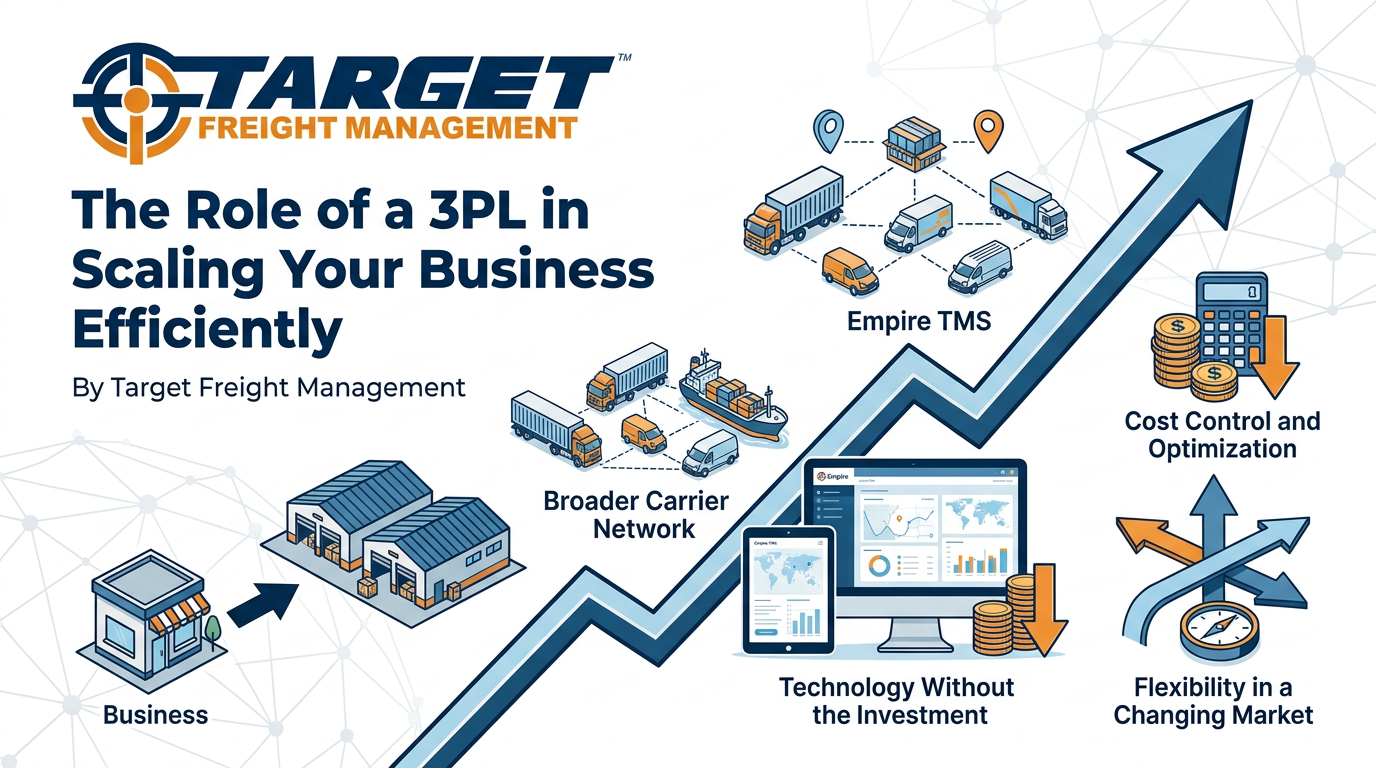
Access to a Broader Carrier Network
One of the most immediate advantages of working with a 3PL is access to a broader and more flexible carrier network. Businesses that manage logistics internally often rely on a limited number of carriers, which can restrict their ability to adapt as shipping needs change.
A limited carrier pool can create challenges when capacity tightens, rates fluctuate, or service requirements vary. Without alternatives, businesses may be forced to accept higher costs or reduced service levels.
A 3PL provides access to a network of vetted carriers across multiple modes, including LTL, truckload, and specialized freight. This expanded network allows for more strategic carrier selection based on specific shipment requirements.
Instead of relying on the same carriers for every shipment, businesses can choose the best option for each load based on factors such as cost, service level, transit time, and lane performance.
This flexibility becomes increasingly important as businesses grow. New customers may require different shipping methods, new regions may introduce unfamiliar lanes, and higher volume may require additional capacity.
With access to a broader network, businesses can adapt to these changes without disruption. The ability to adjust carrier selection based on real-time conditions helps maintain consistency and control even as operations expand.
At Target Freight Management, our carrier network is built on performance and reliability. Each carrier is evaluated based on service history, operational consistency, and ability to meet customer expectations. This ensures that as your business scales, your shipping capabilities scale with it.
Having the right carriers in place is not just about moving freight. It is about maintaining service quality, controlling costs, and supporting long-term growth.
Technology Without the Investment
As logistics operations become more complex, technology becomes a critical component of efficiency. However, building and maintaining a transportation management system internally can be both expensive and time-consuming.
Developing a system requires not only financial investment but also ongoing maintenance, updates, and integration with other business tools. For many businesses, this level of investment is not practical, especially when logistics is not their primary focus.
A 3PL provides access to advanced logistics technology without the need for large upfront costs. This allows businesses to benefit from sophisticated tools without the burden of building them internally.
Through Empire TMS, Target Freight Management’s transportation management system, customers gain access to real-time visibility, instant quoting, reporting tools, and centralized shipment management.
These capabilities allow businesses to manage freight more effectively while maintaining a high level of control. Instead of relying on spreadsheets or disconnected systems, all logistics activity is managed within a single platform.
Technology also improves decision-making. With access to accurate data, businesses can evaluate performance, identify trends, and adjust their strategy based on real insights rather than assumptions.
As operations grow, this becomes increasingly important. The ability to scale without losing visibility or control is a key factor in maintaining efficiency.
By leveraging 3PL technology, businesses can support growth while keeping their logistics operations streamlined and manageable.
Cost Control and Optimization as You Scale
As businesses scale, one of the most common challenges they face is maintaining control over costs. Increased shipment volume often leads to higher overall spend, but without the right strategy in place, those costs can grow faster than expected. What starts as manageable expense growth can quickly become a significant impact on margins if inefficiencies are not addressed.
Freight costs are influenced by a range of variables, including carrier selection, mode choice, routing, packaging, and shipment frequency. When these elements are not managed strategically, businesses may end up overpaying for services, using inefficient transportation methods, or missing opportunities to consolidate shipments.
A third-party logistics provider helps bring structure to cost management by analyzing these variables in a more systematic way. Instead of making shipping decisions based on habit or convenience, decisions are guided by data and performance trends.
This shift from reactive to proactive cost management is critical for scaling efficiently. Rather than simply absorbing higher costs as volume increases, businesses can identify opportunities to optimize their approach and maintain greater control over spending.
For example, shipment data can reveal patterns that indicate when consolidation opportunities exist. Multiple smaller shipments moving to the same region may be more efficiently handled as a single truckload, reducing cost per unit and minimizing handling.
Similarly, mode selection can have a significant impact on cost. While LTL may be appropriate for certain shipments, there may be scenarios where partial or full truckload options provide better value when evaluated over time. Without visibility into these patterns, businesses may continue using the same approach even when more efficient options are available.
Carrier benchmarking is another important factor. Not all carriers perform the same across every lane. A 3PL continuously evaluates carrier performance, allowing businesses to make more informed decisions about which partners deliver the best balance of cost and service.
At Target Freight Management, cost optimization is an ongoing process rather than a one-time adjustment. By continuously analyzing shipment history and performance data, we help our customers identify opportunities to reduce costs while maintaining service quality.
This approach ensures that as your business grows, your logistics strategy evolves alongside it, supporting both efficiency and long-term profitability.
Flexibility in a Changing Freight Market
The freight market is constantly evolving. Capacity fluctuates, rates shift, and disruptions can occur with little warning. Businesses that rely on rigid logistics structures often struggle to adapt to these changes, leading to delays, increased costs, and operational challenges.
As companies scale, the need for flexibility becomes even more important. Growth often introduces new shipping lanes, varying order volumes, and changing customer requirements. Without the ability to adjust quickly, maintaining consistency becomes difficult.
A third-party logistics provider offers the flexibility needed to navigate these changes without disrupting operations. By leveraging a broad carrier network and real-time data, a 3PL can adjust strategies as conditions evolve.
For example, when capacity tightens in a particular region, a 3PL can shift to alternative carriers or adjust routing strategies to maintain delivery timelines. When rates increase, shipment data can be used to identify opportunities for consolidation or mode adjustments that help offset rising costs.
Flexibility also applies to scaling up and down. Businesses often experience fluctuations in demand, whether due to seasonal trends, market conditions, or business cycles. A 3PL allows companies to adjust their logistics capacity without having to hire or reduce internal staff.
This adaptability ensures that businesses are not locked into a fixed structure that may not align with current needs. Instead, logistics operations can expand or contract as required, supporting both growth and efficiency.
At Target Freight Management, flexibility is built into our approach. By combining carrier network access with data-driven insights, we help our customers remain agile in a constantly changing market.
This ability to adapt quickly helps reduce risk, maintain service levels, and support long-term growth.
Improving Service Consistency at Scale
As businesses grow, maintaining consistent service becomes increasingly challenging. More shipments, more destinations, and more variables can lead to inconsistencies if processes are not properly managed.
Customers expect reliability regardless of order volume. Late deliveries, inaccurate tracking, or communication gaps can quickly impact customer satisfaction and brand reputation.
A structured logistics approach helps address these challenges by standardizing processes across all shipments. A 3PL introduces consistency in how freight is planned, executed, and monitored, reducing variability and improving overall performance.
This includes consistent carrier selection based on performance, standardized communication practices, and real-time tracking that keeps all stakeholders informed. By managing these elements within a defined system, businesses can maintain service quality even as operations scale.
In addition to improving reliability, consistent processes make it easier to identify and resolve issues. When shipments are managed within a structured framework, deviations become more visible, allowing for quicker response and resolution.
At Target Freight Management, we focus on maintaining consistency across every aspect of the shipping process. From initial planning to final delivery, our goal is to ensure that each shipment meets the same standard of performance.
This level of consistency supports customer satisfaction, strengthens relationships, and reinforces the reliability of your operations as your business grows.
Reducing Internal Strain on Your Team
One of the less visible challenges of scaling logistics operations is the strain it places on internal teams. As shipment volume increases, so does the workload associated with coordinating freight, communicating with carriers, and managing issues.
Without additional support, this increased workload can lead to burnout, errors, and reduced efficiency. Teams that are focused on managing logistics may have less time to dedicate to other critical business functions.
A third-party logistics provider helps alleviate this strain by taking on the operational responsibilities associated with freight management. Instead of handling every shipment internally, businesses can rely on a dedicated team to manage the details.
This includes coordinating pickups, communicating with carriers, tracking shipments, and resolving issues as they arise. By offloading these tasks, internal teams can focus on strategic priorities and core business activities.
Reducing internal strain not only improves efficiency but also supports better decision-making. Teams that are not overwhelmed by day-to-day logistics tasks are better positioned to evaluate performance, plan for growth, and drive long-term success.
At Target Freight Management, we act as an extension of your team. Our goal is to provide the support needed to manage your logistics operations effectively while allowing your internal resources to focus on what matters most.
Building a Scalable Logistics Infrastructure
Scaling a business requires more than increasing sales. It requires building an infrastructure that can support growth without introducing inefficiencies or compromising service quality.
Logistics plays a central role in that infrastructure. Without the right systems, processes, and partnerships in place, growth can lead to increased costs, operational challenges, and reduced performance.
A third-party logistics provider helps establish a scalable logistics foundation. By combining carrier network access, advanced technology, and operational expertise, a 3PL creates a framework that supports growth at every stage.
This framework is not static. It evolves alongside your business, adapting to changes in volume, geography, and customer requirements. This ensures that your logistics strategy remains aligned with your overall business goals.
At Target Freight Management, we focus on building long-term partnerships with our customers. Our approach is designed to support sustainable growth by providing the tools, relationships, and insights needed to scale efficiently.
By establishing a strong logistics foundation, businesses can grow with confidence, knowing that their operations are supported by a system designed to handle increased demand.
Supporting Growth with the Right Logistics Strategy
Scaling efficiently requires a shift in how logistics is managed. Instead of treating shipping as a transactional process, it becomes a strategic function that directly impacts cost, service, and overall performance.
A 3PL plays a key role in this transition by providing the expertise and infrastructure needed to support more advanced logistics strategies. This includes evaluating shipment patterns, optimizing routing, and continuously refining processes to improve efficiency.
With the right strategy in place, logistics becomes a driver of growth rather than a constraint. Businesses can expand into new markets, increase order volume, and meet customer expectations without overextending their resources.
At Target Freight Management, we work closely with our customers to develop logistics strategies that align with their growth objectives. By combining data, technology, and operational expertise, we help businesses scale in a way that is both efficient and sustainable.
Scaling with Confidence and Control
Growth introduces new opportunities, but it also brings new challenges. Managing those challenges effectively requires a logistics approach that is structured, flexible, and built for scale.
A third-party logistics provider provides the support needed to navigate this transition. By handling the complexities of freight management, a 3PL allows businesses to focus on growth while maintaining control over their operations.
From carrier selection and cost optimization to technology and performance tracking, every aspect of logistics is managed with consistency and precision. This ensures that as your business grows, your operations remain aligned and efficient.
At Target Freight Management, we take a proactive approach to supporting growth. By acting as an extension of your team, we provide the expertise and resources needed to scale with confidence.
With the right logistics partner in place, businesses can focus on what they do best while knowing that their freight operations are supported by a system designed for long-term success.