
The Reality of Freight Claims in Modern Logistics
No matter how carefully freight is handled, damages and losses can still occur. Freight claims are an inevitable part of logistics, but how they are managed can make a significant difference in both cost and customer satisfaction. Even when you do “everything right,” freight still moves through a chain of touchpoints—pickup, dock handling, cross-docks, trailers, terminals, transfers, and delivery—where small issues can become expensive problems.
For many organizations, the cost of a freight claim is not limited to the damaged product itself. The total impact often includes administrative time, delayed fulfillment, customer dissatisfaction, expedited replacements, inventory adjustments, and internal disruption across operations, customer service, and finance. When claims are handled inconsistently or without the right documentation, companies can also face longer resolution timelines and an increased likelihood of claim denials.
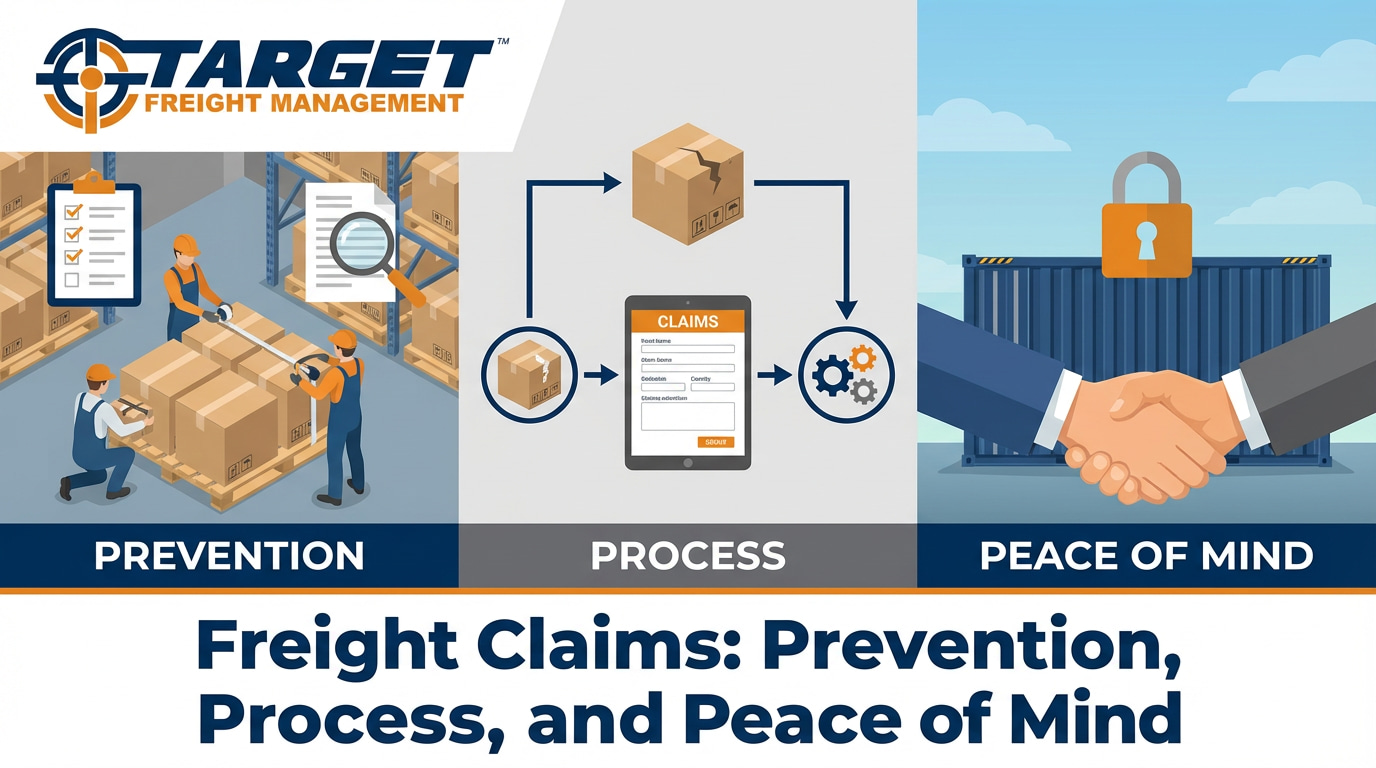
At Target Freight Management (TFM), we take a proactive approach to the management of freight claim. By focusing on prevention, process, and follow-through, we help our customers protect their freight and maintain confidence in every shipment. The goal is straightforward: reduce preventable losses, streamline the claims process when issues occur, and use claim activity as a source of insight that strengthens shipping operations over time.
Below is a practical guide to handling freight claims effectively—and how TFM supports customers every step of the way, using proven best practices and the visibility and reporting available through Empire TMS.
1. Preventing Damage Before It Happens
The best claim is the one that never needs to be filed. Preventing freight damage starts with proper packaging, labeling, and carrier selection. While not every incident can be avoided, a strong prevention strategy reduces the overall frequency of claims and minimizes operational disruption.
Why Prevention Matters
Freight claims management is important, but prevention is where the biggest long-term savings tend to come from. Preventable damage can be costly because it often creates a chain reaction: a customer receives damaged goods, replacement product must be sourced, expedited shipping may be required, and internal teams must spend time documenting the issue. In many cases, the business impact is larger than the claim payout itself.
Prevention works best when it is approached systematically. That means understanding what’s being shipped, how it is packaged, the expected handling environment (LTL terminals vs. dedicated truckload, for example), and where risks tend to occur in the shipping lane.
Common Sources of Freight Damage
- Packaging that isn’t designed for transit realities: Boxes that are too light, insufficient internal padding, or cartons that deform under stacking can fail during handling.
- Weak pallet configurations: Overhang, uneven weight distribution, shifting product, or insufficient stretch wrap can lead to tipping, crushing, or product movement.
- Inadequate labeling: Missing labels, unclear handling instructions, or inconsistent labeling placement can cause misroutes and additional handling.
- Product sensitivity: Some products are more vulnerable to vibration, stacking pressure, temperature changes, or moisture exposure—risk increases if these sensitivities are not accounted for in the shipping plan.
Practical Prevention Habits Shippers Can Implement
Prevention does not require overcomplication—it requires consistency. A few disciplined habits can reduce risk significantly:
- Standardize packaging rules for each product category so teams aren’t improvising box strength, dunnage, or sealing methods.
- Use stable, repeatable pallet builds that distribute weight evenly and minimize shifting.
- Apply clear labeling practices (address labels, pallet counts, and handling indicators) in consistent locations.
- Set internal checkpoints before pickup so freight leaves the dock in “claim-ready” condition—meaning it’s well packaged, documented, and properly described.
How TFM Helps
TFM supports customers by guiding them on packaging standards, pallet configurations, and labeling best practices. The goal is to reduce preventable damage by addressing the most common root causes before freight moves.
Empire Transportation Management System (TMS) also stores shipment data to help identify recurring issues such as high-risk routes or specific product sensitivities. With these insights, customers can strengthen their shipping process and minimize risk. Over time, consistent data visibility helps teams move from reactive problem-solving to proactive improvement.
For example, if a certain lane repeatedly produces damage events, that can signal an opportunity to adjust packaging requirements, review handling instructions, or revisit carrier choices. If a particular product type is consistently involved in damage claims, it may need a revised pallet build or additional protection for transit.
2. Choosing Reliable Carriers
Carrier performance plays a major role in reducing damage claims. Experienced, dependable carriers handle freight with care and follow consistent safety protocols. While cost matters, reliability and handling quality are essential components of an effective freight strategy—especially for organizations that ship frequently or ship high-value products.
Why Carrier Selection Influences Claim Frequency
Every carrier network has its own operational realities. Some carriers excel in certain lanes, terminal networks, or service regions. Others may have inconsistent performance due to operational variability. When freight is handled through multiple touchpoints, small differences in handling discipline can meaningfully affect claim outcomes.
Carrier selection is also closely tied to the “predictability” of the shipping experience. Predictability matters because it allows shippers to build stable internal processes around packaging, scheduling, documentation, and customer expectations. When service is inconsistent, the business experiences more disruption—and freight claims are more likely to occur or become complicated.
What “Reliable” Means in Claims Prevention
Reliability is more than on-time service. In the context of claims, it often includes:
- Consistent handling standards: Freight is moved and stacked with care and with attention to safe loading practices.
- Professional pickup and delivery procedures: Clear documentation, accurate bills of lading, and dependable processes at pickup and delivery.
- Stable operational performance: Fewer service exceptions, fewer unnecessary transfers, and better control over freight conditions.
- Insurance verification and compliance discipline: Proper coverage and adherence to standard operating procedures.
How TFM Helps
TFM’s carrier network is built through rigorous screening, ongoing performance evaluation, and insurance verification. We work only with trusted carriers who maintain a record of safe and professional handling.
This approach helps reduce damage claims by aligning customers with carrier partners who prioritize safe freight movement, consistent processes, and reliable service outcomes. Over time, carrier performance monitoring also helps reinforce a high standard for handling, which supports fewer issues and smoother claim resolution when incidents occur.
3. Handling Claims Quickly and Accurately
When damage or loss occurs, time is critical. Missing or incomplete documentation can delay reimbursement or lead to claim denials. A strong claims process is defined by speed, accuracy, and the ability to provide clear evidence of what happened.
Why Speed and Documentation Matter
Freight claims management often involve multiple parties—shipper, consignee, carrier, and internal finance teams—each needing clarity and proof. Delays can create confusion, increase back-and-forth requests, and raise the likelihood that key documentation is lost or incomplete.
A clean claim submission typically depends on a few essential elements being handled promptly and correctly. When those elements are missing, the process can stall for weeks or longer.
What Strong Claims Documentation Usually Includes
While requirements vary by shipment and circumstances, the documentation that supports claims commonly includes:
- Bill of lading (BOL): Confirms shipment details, description, and terms.
- Delivery receipt and exception notes: Helps document visible damage or shortages upon delivery.
- Inspection reports (when applicable): Adds credibility and detail about damage extent and conditions.
- Photos: Visual evidence of damage, packaging condition, and product state.
- Supporting shipment records: Any related shipment data that confirms timing and movement.
How TFM Helps
TFM’s claims team manages the process from start to finish. We ensure all required documents, bills of lading, inspection reports, and photos are submitted promptly. Every claim is tracked through Empire TMS for full visibility and status updates.
This structure helps customers avoid the common pitfalls that slow down claim resolution. Instead of relying on fragmented emails or disconnected internal tracking, claims can be monitored in a consistent, documented way—supporting clearer communication and a smoother path to settlement.
What This Means for Customers
When claims are handled quickly and accurately, customers benefit in several ways:
- Less internal time spent chasing documents or trying to interpret carrier requests.
- Reduced risk of denials due to missing or incomplete submission details.
- Better visibility into claim status, so teams can plan inventory and customer communication more effectively.
- More confidence that the issue is being managed consistently and professionally.
4. Dispute Resolution and Follow-Up
Carriers may dispute responsibility or request additional information. Without proper communication and persistence, claims can drag on for weeks. This is often where claims become most frustrating for shippers—especially when internal teams are already busy managing daily operations.
Why Disputes Happen
Not every claim is straightforward. Even when damage is clear, questions can arise about:
- Liability and responsibility: The carrier may argue that the damage occurred before pickup or after delivery.
- Packaging adequacy: Some disputes center on whether freight was packaged appropriately for transit conditions.
- Documentation details: Carriers may request additional records or clarification on the shipment, value, or damage scope.
- Timing and process: If a claim is submitted late or without key details, the carrier may challenge it more aggressively.
Disputes are not unusual, but without a consistent follow-up process, they can become time-consuming and difficult to manage. The longer the claim remains unresolved, the more disruption it tends to create—especially when replacement product and customer communication are already in motion.
The Hidden Cost of “Dragging Claims”
When claims stall, the cost is often broader than the value of the claim itself. Companies may experience:
- Extended administrative burden: Repeated emails, phone calls, and documentation requests add up over time.
- Cash flow delays: Reimbursement timelines can affect budgeting and financial planning.
- Customer service strain: Customers often want quick answers; uncertainty creates dissatisfaction.
- Operational distraction: Teams are forced to split attention between day-to-day shipping and claim escalation.
A strong follow-up process reduces these impacts by maintaining momentum, keeping communication clear, and ensuring requests are handled efficiently.
How TFM Helps
TFM communicates directly with carriers to resolve issues efficiently. Our team ensures customers are updated regularly until the claim is settled and payment is received.
This matters because consistent follow-through helps avoid stalled conversations and prevents claim files from becoming disorganized. When carriers request additional details, having a dedicated team that can respond quickly—and keep the timeline moving—often makes a noticeable difference in how smoothly the claim progresses.
For customers, this means fewer status-chasing tasks and more confidence that the claim is being managed proactively rather than reactively.
5. Learning From Claim Data
Every claim tells a story. Analyzing claim data can reveal patterns that help prevent future losses and improve operations. While it’s natural to view claims as isolated incidents, the real value often appears when claims are reviewed collectively—looking for trends across lanes, carriers, product types, and destinations.
Why Claim Data is Operationally Valuable
Freight claim data can highlight the difference between a one-time accident and a recurring weakness in the shipping process. When patterns are identified, shippers can make targeted adjustments instead of implementing broad changes that may not address the root cause.
For example, claim activity may indicate:
- A lane-specific risk: Certain routes may have higher handling frequency, more transfers, or other operational conditions that increase damage likelihood.
- A product sensitivity issue: Some items may require stronger packaging or different pallet builds to handle vibration, stacking, or movement.
- A carrier performance opportunity: If claims cluster around specific carriers, that may signal a need to review carrier selection or performance expectations.
- A packaging consistency gap: If a product experiences mixed outcomes across shipments, internal packaging practices may be inconsistent across locations or shifts.
How TFM Helps
Empire TMS compiles claim data into reports that highlight trends by product, carrier, and destination. With this information, our customers can identify where improvements will have the greatest impact.
Instead of treating claims as isolated paperwork events, customers can use data as a feedback loop. Over time, this supports a stronger shipping operation—one where prevention becomes more informed and where carrier choices are reinforced by real performance outcomes.
Examples of How Customers Can Use Claim Insights
Without overhauling an entire shipping program, targeted improvements can be made when the data points to a clear opportunity. Depending on what the claim trends show, customers may choose to:
- Improve packaging standards for specific product categories with repeated damage exposure.
- Adjust pallet configurations to increase stability, prevent shifting, or reduce overhang risk.
- Refine labeling practices to reduce misroutes and unnecessary handling.
- Review carrier selection in lanes where claim frequency is higher than expected.
- Educate internal teams using real claim examples to reinforce what “claim-preventive” shipping looks like.
This is one of the most powerful ways to reduce claims over time: learn from what happened, implement the most practical change, and track results going forward.
Confidence Through Control
Freight claims may be unavoidable, but they do not have to be stressful. With proactive prevention, clear process management, and reliable follow-up, companies can maintain peace of mind knowing their logistics partner is in control.
Confidence comes from knowing that when something goes wrong, there is a plan—and that the plan is executed consistently. This includes:
- Prevention practices that reduce risk before freight moves
- A documented claims process that is handled quickly and accurately
- Follow-through that keeps claims from stalling and ensures resolution is pursued
- Data-driven improvement that uses claim trends to strengthen shipping operations over time
When these elements work together, claims become less disruptive. Internal teams spend less time reacting and more time improving operations, customers receive clearer updates, and organizations reduce the long-term cost of shipping exceptions.
Why a Proactive Claims Approach Protects More Than Freight
A structured claims approach protects:
- Your freight: Through prevention guidance and carrier alignment.
- Your time: By reducing administrative burden and managing documentation correctly.
- Your customer relationships: With better communication, faster resolutions, and fewer repeat issues.
- Your bottom line: By reducing preventable losses and keeping claims from becoming prolonged operational drains.
The goal is not only to handle claims—it’s to reduce their impact on the business while steadily improving shipping outcomes.
At Target Freight Management, Our Goal is Simple
At Target Freight Management, our goal is simple: to protect your freight, your time, and your bottom line.
By focusing on prevention, process, and follow-through, we help customers build a more resilient freight operation—one that can handle inevitable issues without losing momentum. With the visibility and tracking available through Empire TMS, customers can also turn claim activity into actionable insight and make improvements that reduce risk going forward.
Freight claims don’t have to create ongoing stress. With the right partner and a disciplined approach, claims can be managed effectively, communication can stay clear, and shipping confidence can remain high—shipment after shipment.